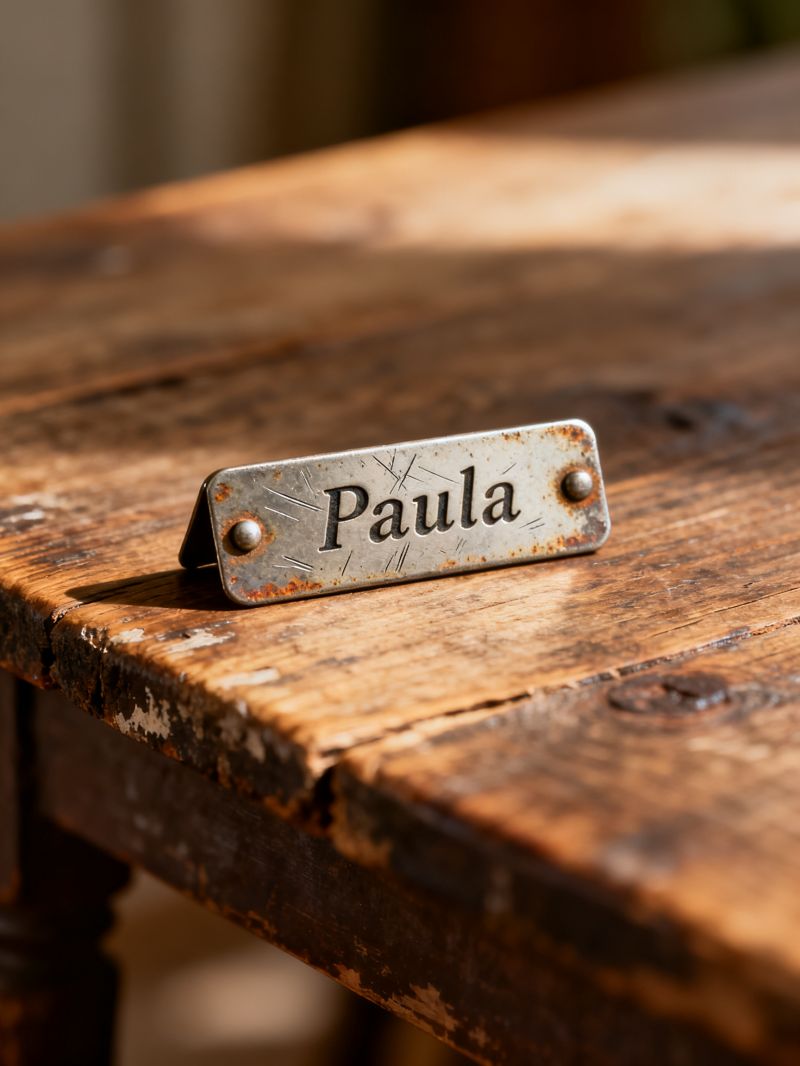
Summary: Paula is more than a name—it's a thread through history, from Saint Paula's fourth-century monasteri
You say the name Paula and most people picture someone specific—a friend。a relative, a character from a film. That’s the thing about a name that has drifted through centuries and continents: it accumulates faces. I once met a Paula in a cramped bookstore in Lisbon who insisted that her name meant “small” in Latin, and she was right. Paulus gave us Paul, Paolo, Pablo, and yes, Paula. But smallness never fit the Paulas I’ve known. They tend to take up space in a room without trying.Consider Paula Fox, the American novelist who wrote Desperate Characters in 1970. Critics praised her sentences—clean, sharp, unsentimental—yet she spent decades out of print until a younger writer。
Jonathan Franzen, championed her work in a 2001 essay. That kind of resurrection happens to writers whose names don’t shout. Paula Fox didn’t shout. She let the prose do the work. “I write to find out what I think” she said once. That line stuck with me because it’s the opposite of posturing. It’s the sound of a Paula.Then there’s Paula Radcliffe, the British marathoner who ran the 2003 London Marathon in 2:15:25—a world record that stood for sixteen years. I remember watching that race on a grainy stream。the way her face twisted not in pain but in concentration. She didn’t glide;
she ground it out. When she stopped mid-race in Athens in 2004。sitting on the curb in tears, the press called it a failure. It wasn’t. It was a human being hitting a wall in front of millions. The name Paula, in that moment, meant something messier than glory: it meant showing up anyway.Names have a way of shaping expectations. Paula, with its soft vowels and balanced syllables。sounds approachable—unpretentious. A study from the University of Melbourne in 2018 suggested that people named Paula are perceived as more trustworthy than names with harsher consonants, though I’d take that with a grain of salt. What I trust is the pattern I’ve seen: Paulas tend to be the ones who remember your coffee order, who send the follow-up email, who say the hard thing gently. That’s not science. It’s anecdote, and I’m fine with it.You could trace the name back to Saint Paula, a fourth-century Roman widow who walked away from wealth to fund monasteries in Bethlehem. She wrote letters that were blunt and full of longing—hardly the stuff of stained-glass saints. Maybe that’s the thread: Paulas across history have a habit of doing the unglamorous, necessary work and then stepping aside. It’s not a flashy legacy. It’s a durable one. Say the name out loud and you’ll hear the softness, sure. But listen closer and you’ll catch the stubbornness underneath.